
SKF
SKF remanufactures industrial rolling bearings and components, restoring performance while reducing material use through closed-loop processes globally.
Litteraturcase
Davies Office is a pioneer in office furniture remanufacturing using circular systems and sustainable design to reduce environmental impacts.
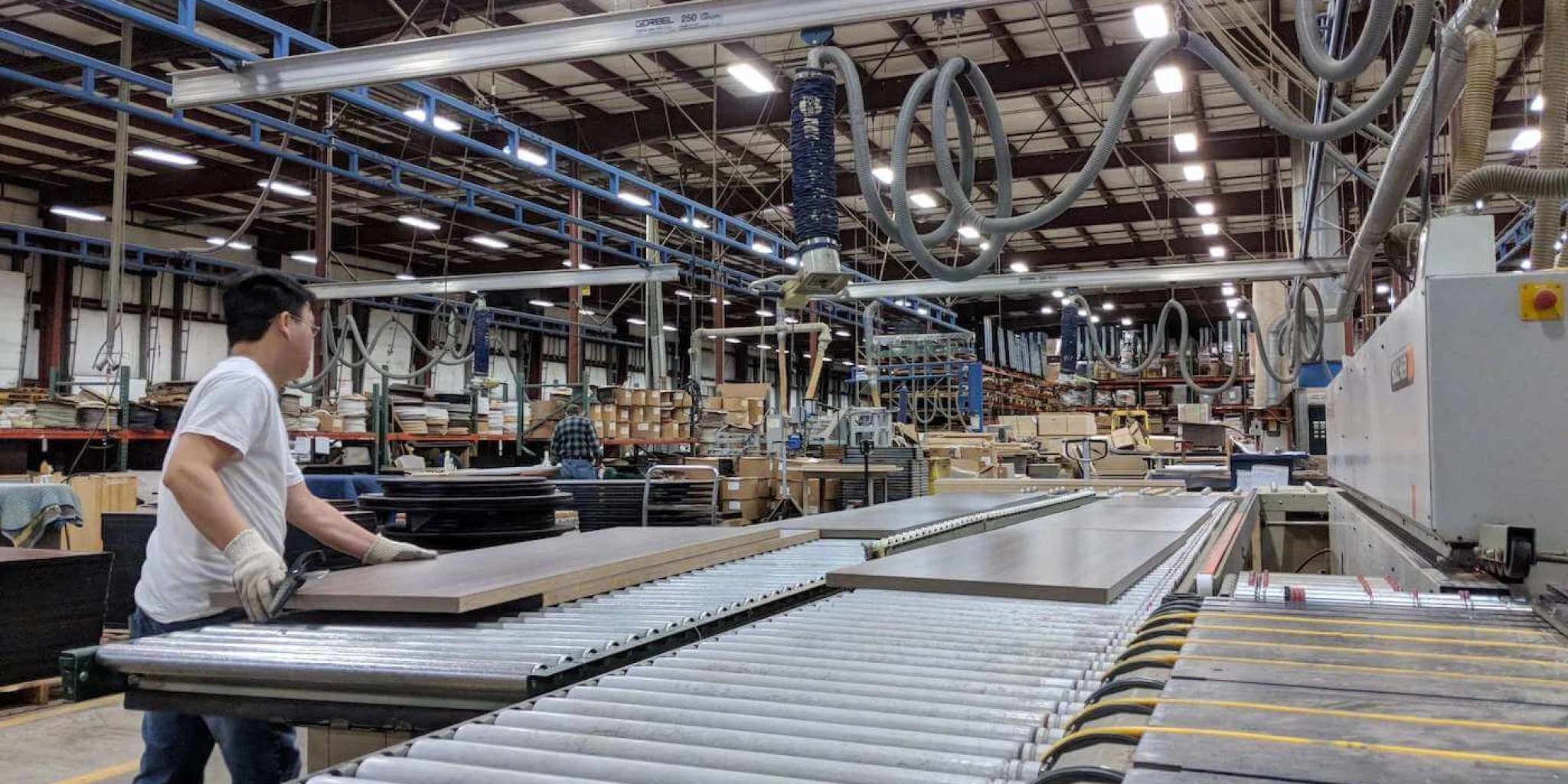
Davies Office, an American office furniture remanufacturer established in 1948, is the largest independent company of its kind in the United States. With approximately 160 employees, the firm focuses on providing sustainable solutions for corporate and home office spaces. They offer a diverse range of new, remanufactured, used, and custom-retrofitted furniture pieces, including cubicles, workstations, and chairs. By prioritising remanufacturing, the company offers a circular alternative to traditional offerings by reusing core components. This approach allows them to serve as a total solutions provider, helping clients meet both their budgetary requirements and environmental goals.
The remanufacturing process at Davies Office begins with the complete disassembly of worn or nonfunctional office furniture. This stage allows for frame components, panels, and hardware to be individually inspected for structural integrity and quality. Durable core materials are retained and rebuilt to like-new condition, while surfaces, finishes, and fabrics are replaced using modern machinery. The company employs high-efficiency cutting algorithms and low-VOC powder coatings to minimise material waste and harmful emissions during production. These practices ensure that the final products are functionally equivalent to new systems while maintaining a lifetime warranty for users.
Davies Office operates a circular take-back model through its Sustainable Exchange Program, which allows organisations to bank their existing workstations. Instead of discarding or storing furniture, customers return cores that are evaluated based on original manufacturer benchmarks and current market value. The banked value of these assets is then applied as a credit toward future remanufactured furniture projects. This system effectively eliminates warehousing costs and keeps high-value materials in circulation within the economy.
The company incorporates Design for Environment principles to emphasise durability, modularity, and end-of-life recovery. Although they often remanufacture furniture from other suppliers, their design focus ensures that components can be remanufactured multiple times while retaining structural integrity. They analyse products from a life-cycle perspective to select materials and construction methods that facilitate easy disassembly and replacement of parts. Additionally, Davies incorporates modern upgrades and ergonomic improvements into their designs, such as articulating keyboard trays and updated styling. This ensures remanufactured furniture meets modern office needs while maximising the reuse of core components.
The business model for Davies Office centres on circular asset management and the recovery of value from existing office furniture. As a leader in the industry, they offer a combination of remanufactured systems, new furniture, and asset recovery services to reduce the need for new production. This model can provide significant cost savings, with remanufactured solutions often being much cheaper than new alternatives from major manufacturers. By integrating product banking and exchange programs, the company fosters a closed-loop furniture ecosystem that replaces traditional linear procurement. This approach effectively turns used workstations into valuable credits for future office space configurations.
Sustainability screening is integrated into the operational procedures at Davies Office through rigorous life-cycle assessments and quality evaluations. The company utilises a Sustainable Exchange Program, in which returned furniture cores are screened against original equipment manufacturer standards to determine their suitability for remanufacturing. They have partnered with the Rochester Institute of Technology to quantify the environmental impacts of their processes, using modelling software and actual product data. These screenings verify that their remanufactured products use significantly less energy and produce fewer carbon emissions than new products. This data-driven approach allows the company to provide verified metrics for corporate sustainability reporting.